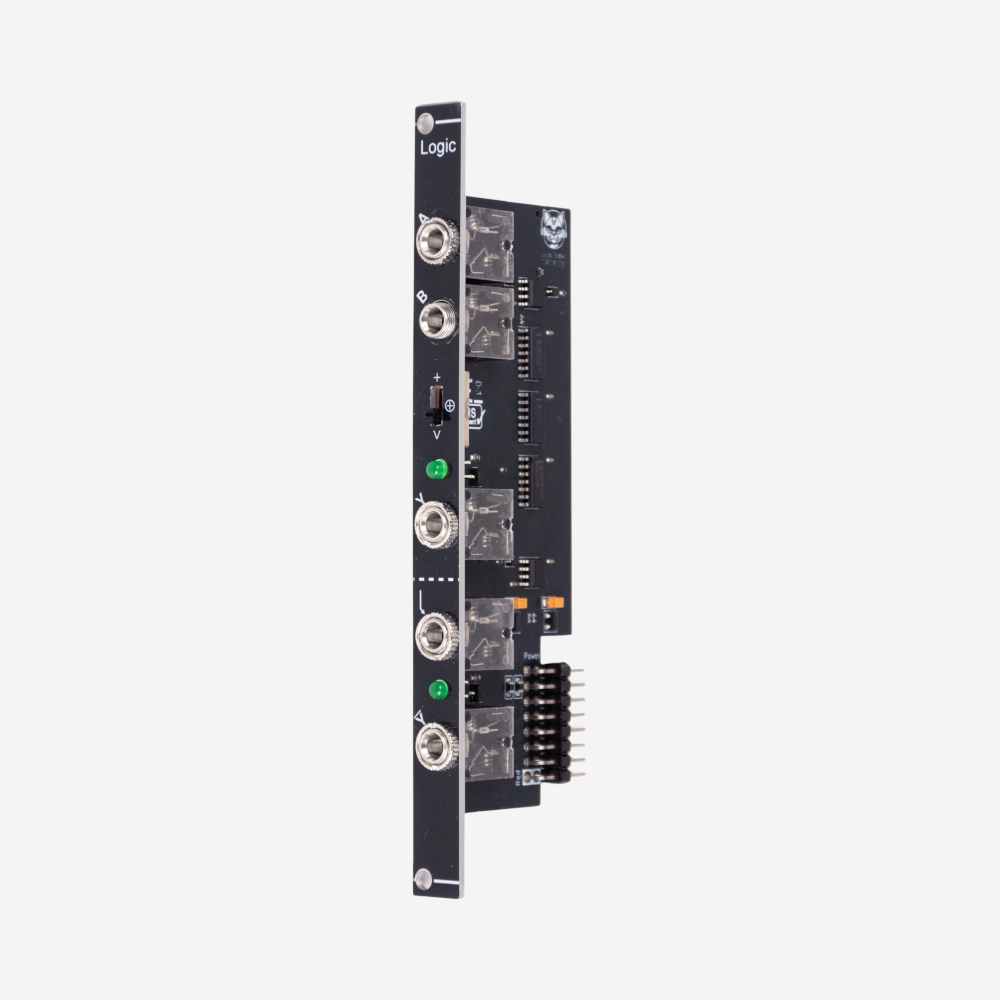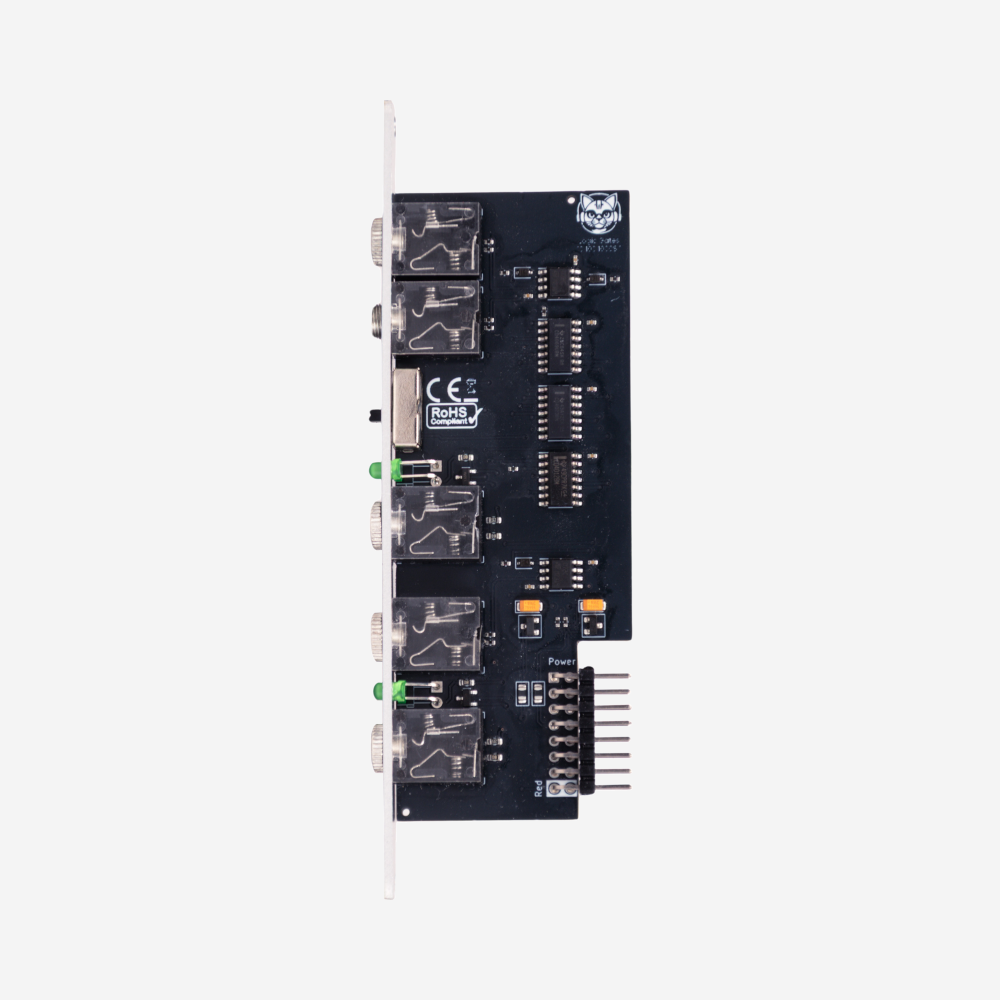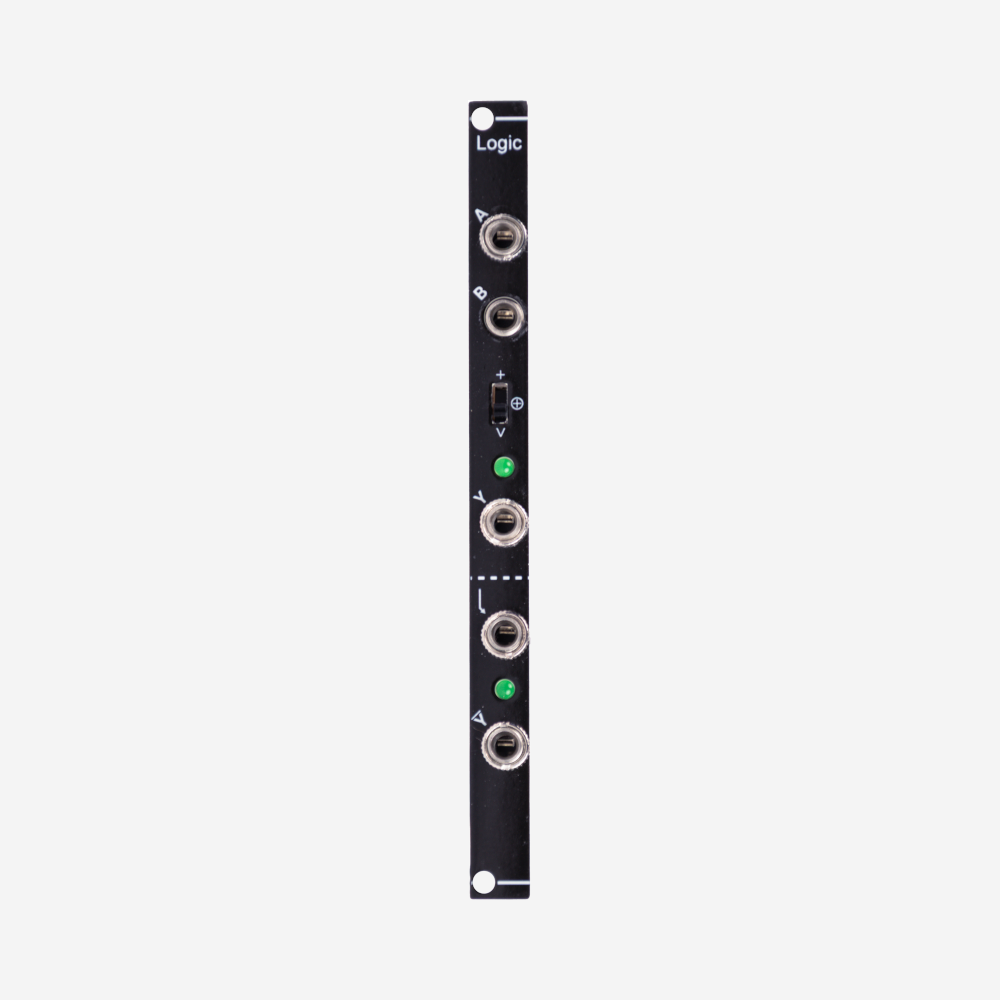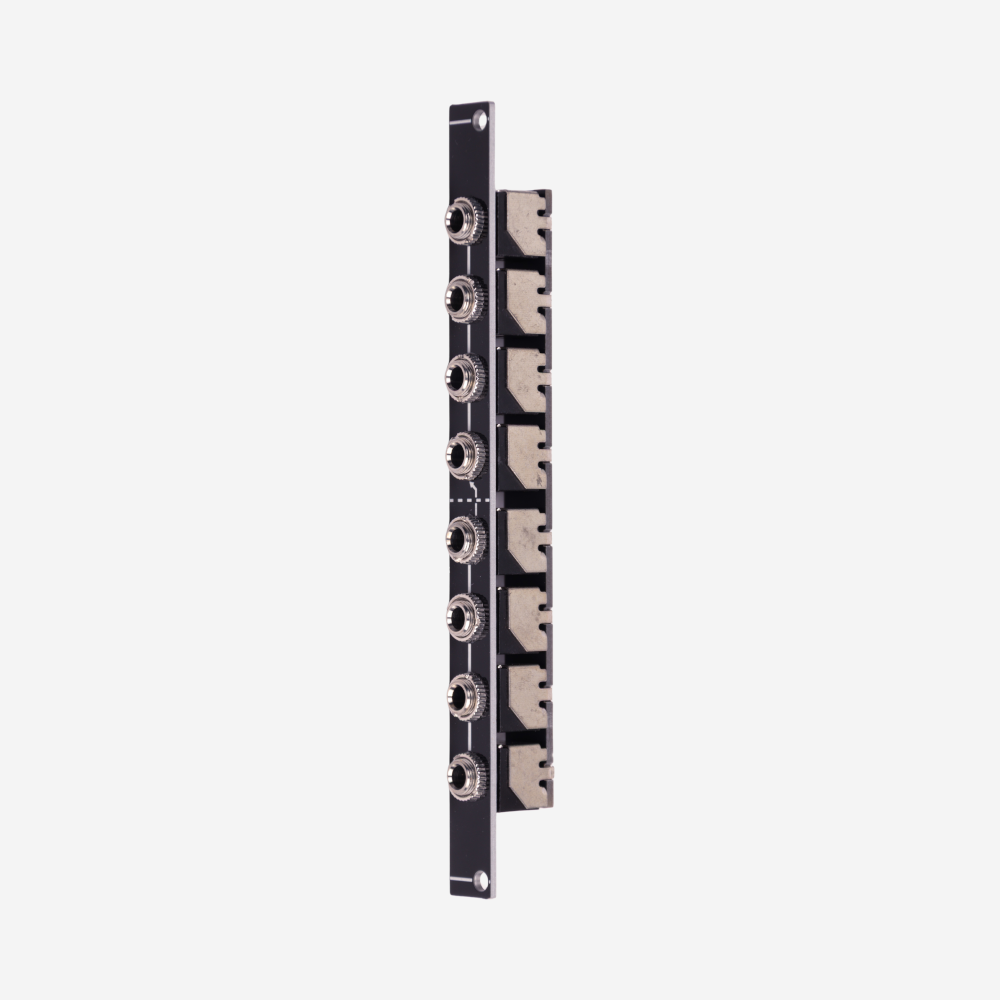
Slimline Sync LFO

SKU: 10100100159
EAN:0718603250943

Delivery time: 5 working days

52,00 
In Stock
  • Module
  • 16-pin to 10-pin power cable, 30 cm
  • 2 × M2.5 × 9 mm Phillips-head screws
  • 2 × M3 × 9 mm Phillips-head screws

Slimline Sync LFO Manual

This product has been added to 184 people'scarts.

In Stock
Add to wishlist

Description

Slimline Sync LFO

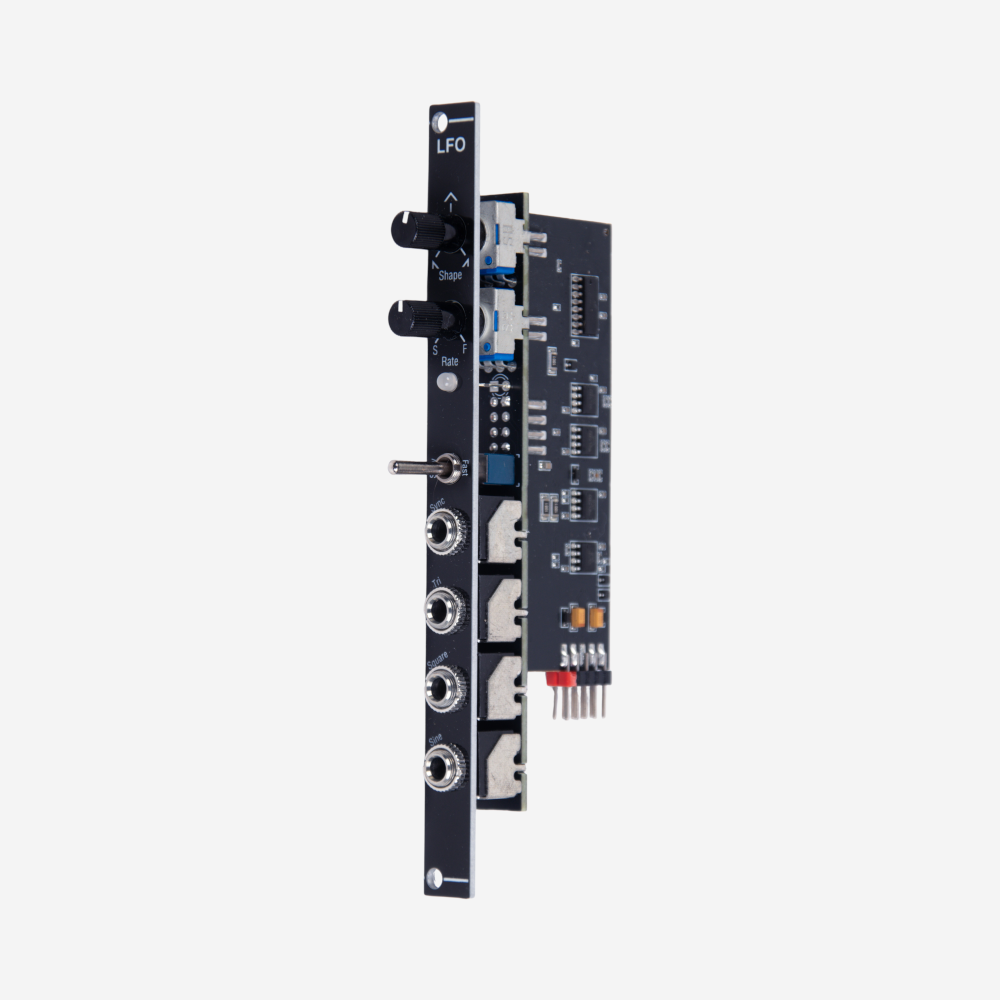
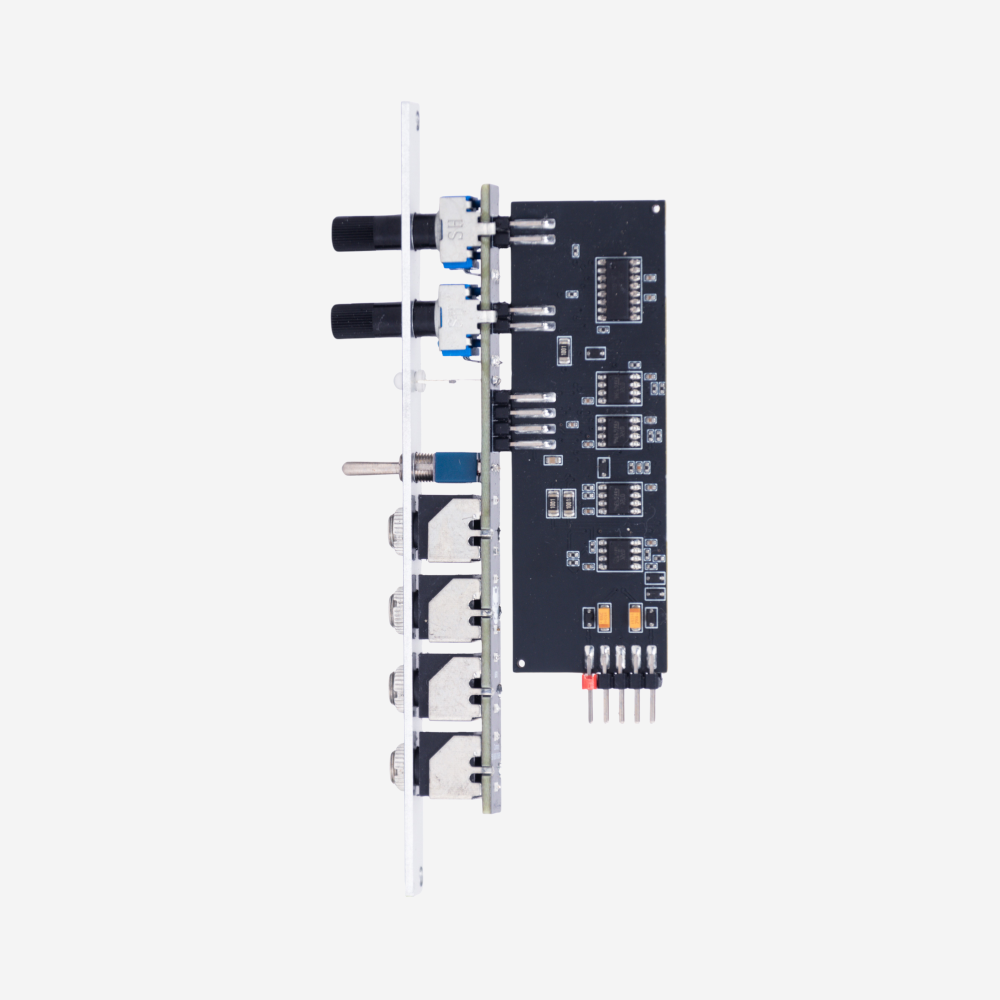
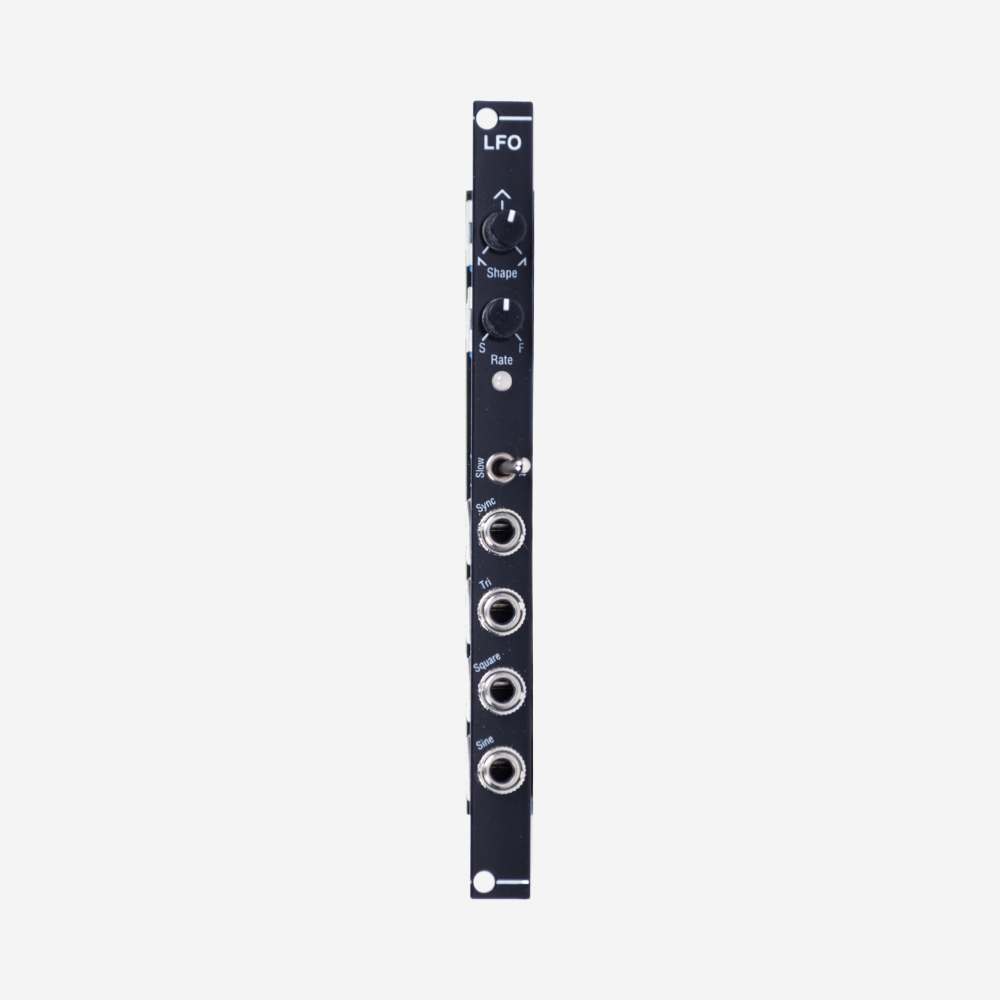
Synchronisable LFO with rate control and multiple waveforms for Eurorack in 2 HP

The Slimline Sync LFO introduces cyclic movement into patches that should not remain static. An LFO can open a filter slowly, make a VCA pulse, modulate pulse width or bring an effect parameter to life. The important question is not only whether movement is present, but whether it should flow freely or follow the rhythm of the rest of the patch.

This is where the Sync LFO comes in. It can operate as a traditional free-running modulator, but it can also be synchronised to an external clock. A modulation therefore no longer has to drift alongside the groove; it can be deliberately integrated into a clock structure. This makes a substantial difference in live patches and rhythmic sequences.

Why use a synchronisable LFO?

Free-running LFOs are ideal for beating effects, slow changes and organic movement. In rhythmic patches, however, free movement can also work against the timing. A synchronisable LFO combines both approaches: it can move loosely and fluidly or lock to a timing reference when the patch requires clear repetition.

This is particularly useful when modulation should do more than add decoration. A filter sweep can respond to the beat, tremolo can stay in the groove, and cyclic CV can make several voices breathe together. The LFO therefore becomes not only a source of movement, but also a rhythmic building block.

Rate and waveform as musical decisions

The rate determines how quickly the target parameter moves. Slow settings produce drift, gentle developments and subtle shifts. Faster ranges can sound rhythmic, percussive or rougher depending on the destination being modulated.

The waveform determines the character of the movement. A triangle wave rises and falls evenly. A square wave behaves more like a switch and is useful for clear changes or rhythmic jumps. A sine wave moves smoothly and naturally, making it particularly suitable for subtle timbral motion, vibrato, tremolo or slow filter modulation.

Modulation in a compact patch

At 2 HP, the Slimline Sync LFO can sit directly beside the point where movement is needed. This is useful because Eurorack modulation is often generated locally: beside a voice, next to an effect, before a VCA or in the control section of a sequencer. A small LFO can have a significant effect when it reaches the right destination.

Its synchronisation function also makes it a natural partner for clock dividers, sequencers and trigger structures. A patch can begin in a free-running state and later shift into a clear rhythmic order without replacing the modulation source.

Between drift and groove

A good LFO does not need to draw constant attention to itself. A small amount of movement is often enough to keep a static sound alive. The Sync LFO can take on exactly this unobtrusive role—for example as a slow filter movement or subtle modulation of an effect parameter. When the patch becomes more rhythmic, the same source can be tied more closely to the timing.

This dual role is particularly appealing: free-running modulation for organic variation, synchronised movement for repeating patterns. The patch therefore does not have to choose between musical looseness and rhythmic control. Both states can arise from the same modulation source.

In combination with clock dividers, sequencers or logic modules, the LFO can consequently perform several functions. It provides continuous movement, but can also become part of the rhythmic architecture when required. This makes it more than merely a slow utility voltage.

In compact voices especially, one synchronisable LFO can combine several tasks: subtle timbral movement, clock-related accents and a common modulation language for different destination modules.

It is therefore useful for more than conspicuous sweeps. Its most important role is often subtler: keeping a patch in motion without changing its fundamental character. When synchronisation is required, the same movement can operate with greater rhythmic discipline.

Typical applications

  • modulate filters, VCAs, waveshapers or effects cyclically
  • synchronise LFO movement to an external clock
  • use smooth sine or triangle motion for subtle modulation
  • use square-wave modulation for rhythmic changes
  • add a dedicated, clockable source of movement to compact voices

Additional information

Weight 0,07 kg
Dimensions 15 × 2 × 10 cm
Width

2HP

Depth

42mm

Current draw +12 V / −12 V / +5 V

25mA / 20mA / 0mA

Product safety

Manufacturer information

CatSynth Dr. Zülch
Beethovenstr. 17
D-76689 Karlsdorf-Neuthard

Reviews

There are no reviews yet.

Be the first to review “Slimline Sync LFO”

Your email address will not be published. Required fields are marked *

Eine Frage stellen

Slimline Sync LFO

    Search

    Your Cart

    Your cart is empty!

    You may check out all the available products and buy some in the shop..

    Wishlist

    The wishlist table is empty.

    Return to shop

    All Categories